
Advertisement
Americans now switch tasks every three minutes on average. This shift shows a big drop in attention span at work, school, and home.
In the U.S. and worldwide, a short attention span is a big problem. Surveys show more people can’t focus for long. Teachers and managers are getting frustrated with lower productivity.
This issue affects our work and learning. It leads to slower progress, more mental tiredness, and less happiness. When we can’t focus, everything takes longer, and stress increases.
We’ll look at why this is happening. It’s due to technology, social media, and other factors. We’ll also share ways to improve focus. If you’re feeling overwhelmed, this guide is for you.
Understanding Attention Span Decline
Attention is not just one skill. It’s divided into sustained, selective, and executive attention. This part explains what attention span means in science and how it changes over time.
What Is Attention Span?
Sustained attention lets you stay focused for a while. Selective attention helps you ignore distractions to focus on what’s important. Executive attention helps you manage tasks and plan your actions.
Think of attention span as both how much you can handle and your habits. Your capacity grows with practice. Your habits are shaped by your environment and what you do every day.
Historical Context of Attention Span
Early psychology laid the groundwork. William James said attention is like taking control of your mind. He also noted its limits. Later, scientists used timed tasks and signal-detection tests to study attention.
Today, we have numbers to show attention span is getting shorter. Surveys and studies show many adults and teens feel they can’t focus as well. Research also links multitasking with weaker focus.
Cognitive overload is key. Too much information makes it hard to focus. This is why too much tech, stress, and distractions matter.
This background helps us understand digital habits, distractions, and how our minds work. It prepares us for practical tips that will follow.
The Role of Technology in Attention Span
Technology changes how we focus. Smartphones, feeds, and notifications alter our habits. This creates a world where distractions are always there and hard to ignore.
Platforms like Facebook and Instagram use tricks to keep us hooked. They offer variable rewards and endless scrolling. Research shows heavy social media use and multitasking can reduce our ability to focus.
Social Media and Shortened Focus
Likes and comments create a dopamine loop. We get quick rewards for short interactions. This makes us prefer fast content and seek instant gratification.
Switching apps often weakens our focus. This effect is stronger in heavy users and those who multitask with media.
The Impact of Instant Gratification
Streaming and one-click purchases train us to expect quick rewards. This lowers our patience for delayed results. It makes sustained effort less appealing.
Companies aim for more engagement through design and notifications. They want us to spend more time online, not focus better. This leads to more distractions and short, busy lives.
Later sections will offer solutions. We’ll learn to set tech boundaries, manage notifications, and choose designs that help us focus.
| Driver | How It Works | Short-Term Effect | Long-Term Risk |
|---|---|---|---|
| Algorithmic Feeds | Personalized recommendations keep content flowing | High engagement and quick clicks | Reduced tolerance for slow, focused tasks |
| Push Notifications | Interruptions that demand immediate attention | Frequent task switching | Chronic fragmented attention |
| Variable Rewards | Unpredictable feedback like likes and comments | Heightened excitement and return visits | Preference for short, stimulating content |
| On-Demand Services | Instant access to media, shopping, and tools | Fast satisfaction for needs | Lowered impulse control and patience |
Everyday Distractions
Small interruptions can add up quickly. Phones, apps, and noisy rooms break work into short pieces. This constant distraction makes it hard to focus on deep tasks.
How Notifications Hijack Your Focus
Notifications grab your attention with sounds, visuals, and vibrations. Research shows it can take over 20 minutes to get back to work after an interruption. This leads to slower work and more mistakes.
People get dozens to hundreds of notifications every day. Emails, messaging apps, and social media are the main culprits. These alerts constantly pull your focus away from what you’re doing.
Multitasking: Friend or Foe?
Multitasking might seem like a good idea, but it’s hard for the brain. Switching between tasks increases errors, slows you down, and makes you tired. Studies show we’re not good at doing two hard tasks at once.
Some multitasking is okay, like folding laundry while listening to music. But doing important tasks while distracted, like writing a report, hurts quality and speed.
The Influence of Your Environment
Your workspace affects your focus. Noisy offices, cluttered desks, and bad lighting all make it harder to concentrate. Research shows high noise and poor ergonomics lead to more mistakes and slower work.
Changing your environment can help. Using noise-cancelling headphones, clearing your desk, or improving the lighting can help your brain stay focused. It also makes it easier to recover from distractions.
Practical tip: Set aside time without distractions, turn off nonessential alerts, and group simple tasks together. This helps protect your focus from constant digital distractions.
Psychological Factors at Play
Our minds handle many tasks daily. Stress, long hours, and constant alerts strain our mental resources. This pressure can alter how we focus and make it seem scarce.
Stress and Its Effect on Concentration
Chronic stress raises cortisol and weakens the prefrontal cortex. This area is key for working memory and executive control. People find it hard to keep tasks in mind and resist distractions.
Studies in neuroscience show stress and concentration are linked to lower task performance. Simple tasks take longer and errors increase when the brain is in threat mode.
The Science Behind Attention
Three brain networks guide our attention. The default mode network fuels mind-wandering. The dorsal attention network supports focused work. The salience network flags what matters now.
Imbalance among these systems can cause cognitive overload. Prolonged effort leads to mental fatigue and decision fatigue. This reduces our ability to stay focused.
Attention is not fixed. Neuroplasticity lets training reshape circuits that control focus. Practices like targeted training, better sleep, and stress reduction help rebuild capacity and ease cognitive overload.
Clinical conditions like ADHD and mood disorders can shorten attention span in distinct ways. These diagnoses differ from situational decline caused by lifestyle. But both benefit from tailored strategies that address stress and concentration and limit mental fatigue.
Age and Attention span
Our attention changes as we age. Kids start learning to focus. Teens’ brains change, affecting what they find interesting. Adults juggle work, family, and screens. Older adults might process slower but still focus well on familiar tasks.
Attention Span Changes Over Time
Studies show clear changes in attention as we grow. Young kids can focus for a few minutes. School-age kids can focus longer on reading and play.
Teenagers’ brains are still growing, and they spend a lot of time on screens. This affects their focus. Adults often get distracted by notifications and multitasking. This leads to a decline in attention span.
Research shows kids get better at focusing from ages 4 to 12. Teens spend hours a day on screens. After 60, some attention skills may slow down, but focus on familiar tasks stays strong.
Strategies for Different Age Groups
Children need routine play and hands-on activities. Parents should limit screen time and encourage outdoor play. Puzzles help build focus.
Teens do well with digital literacy and tech-free times. Schools and families should encourage deep learning over shallow browsing. Small changes in homework can help teens focus better.
Adults should set boundaries at work and turn off non-essential notifications. The Pomodoro technique and mindfulness help stay focused. Ergonomic workspaces also improve concentration.
Older adults benefit from cognitive games, social activities, and regular routines. These help manage information and keep attention sharp. Regular exercise and community programs also support focus and daily life.
| Age Group | Typical Attention Traits | Common Vulnerabilities | Effective Strategies |
|---|---|---|---|
| Children (3–9) | Building sustained attention; short bursts | High susceptibility to screen habits | Structured play, screen limits, puzzles |
| Adolescents (10–19) | Shifting priorities; increased reward-seeking | Heavy social media use, multitasking | Digital literacy, tech-free schedules, deeper study |
| Adults (20–59) | Stable control with lifestyle pressures | Work interruptions, notification overload | Boundary-setting, mindfulness, time management |
| Older Adults (60+) | Slower processing; selective attention often intact | Cognitive slowing, distraction sensitivity | Cognitive exercises, social engagement, routines |
The Influence of Content Consumption
Streaming and short-form video platforms change how we focus. Services like Netflix, Hulu, Amazon Prime Video, and TikTok push us to keep watching and seek new things. This affects our habits, choices, and how we tackle reading or deep work.
Binge-Watching Effects
Binge-watching grew with features like autoplay and episode hooks. When one episode follows another, we skip breaks that help us focus. This leads to a habit of passive watching, making focused tasks harder.
Streaming services aim to keep us watching as long as possible. This trains us to expect easy entertainment, making us less patient with longer, more challenging content.
Short Videos and Attention Shifts
Apps like TikTok, Instagram Reels, and YouTube Shorts focus on quick, new content. This teaches our brains to look for fast, exciting things, changing how we pay attention.
Studies show that too much short-form content can hurt our ability to focus and understand deeply. This suggests that fast content is favored over engaging, in-depth material.
How Design Shapes Habits
- Autoplay: removes natural stopping cues and extends sessions.
- Cliffhangers: encourage immediate continuation and routine formation.
- Fast edits: condition a preference for quick rewards and high visual pacing.
These design elements work with the attention economy to make us scan more. Over time, this can lead to a shorter attention span for reading, studying, or solving problems.
Practical Choices for Viewers
Being mindful can help. Choose longer content like documentaries, long articles, or feature films on purpose. Turn off autoplay and set limits on short videos to balance newness with depth.
Some short-form content is educational, but its format encourages quick switching. By choosing content with care, we can improve our focus and counteract the effects of binge-watching and short attention spans.
Strategies to Improve Your Focus
Small, easy changes can greatly improve your focus. Mix mental habits, device rules, and work rhythms to make it feel natural. Start with small steps and add more techniques over time.
Mindfulness Practices
Try focused breathing, daily meditation, and body scans to improve your attention. These practices help you notice when your mind wanders and bring it back. Studies show they boost your ability to focus and reduce stress.
Begin with three to ten minutes of focused breathing each morning. Gradually increase to a 15-minute meditation or walking meditation. These habits clear your mind and help you concentrate longer.
Setting Boundaries with Technology
Use technology wisely by setting limits. Turn off distracting notifications and use Do Not Disturb or Focus mode. Schedule specific times to check your email.
Install website blockers like Freedom or StayFocusd for focused work periods. Make tech-free zones for meals and the first hour after waking. This helps protect your attention from the start of the day.
Time Management Techniques
Choose rhythms that support deep work. Try Pomodoro sessions of 25 to 50 minutes with breaks. This method reduces the tiredness from switching tasks too often.
Use the Eisenhower Matrix to prioritize tasks. Group similar tasks together to save time and improve focus. This helps you manage your time better.
Environmental and Habit Adjustments
Your environment affects your focus. Keep your workspace clean and set up ergonomically. Use noise-canceling headphones or white noise when needed.
Good sleep, exercise, and nutrition boost your brain power. Regular rest and activity make mindfulness and time management more effective.
Training, Tools, and Implementation Tips
Apps like Lumosity offer quick exercises, but real-world practice is more effective. Keep a journal to track your progress. Start with one habit, measure after two weeks, and add more as needed.
Combine mindfulness, tech boundaries, and time management for lasting improvement. Start with one habit, measure after two weeks, and add another when it feels natural.
Educational Impacts
Teachers face more challenges in keeping students focused. This is due to increased screen time and the habit of consuming media in short bits. These factors contribute to students having shorter attention spans and getting distracted more often during lessons.
Using active learning and checking in often can help regain focus. These methods are more effective than long lectures. They also help improve student focus by varying the pace of learning.
Attention Span in Students
Public school surveys show a drop in sustained engagement with long texts. Students tend to prefer fast-paced media, which changes how teachers must teach.
Simple changes in the classroom can cut down on distractions. Using visual timers, clear transitions, and short breaks can help students stay focused. These strategies are practical ways to address the decline in attention span in schools.
Creating Engaging Learning Environments
The design of the classroom is important. Keeping it free from clutter, using tech wisely, and mixing group and individual work boosts engagement.
Training teachers on methods that support attention and setting clear rules for device use are key. Guidance from parents on home routines also helps improve focus over time.
Research supports early action. Studies show that active, project-based learning leads to better results and less multitasking. Schools that adopt these methods can lessen the effects of declining attention span.
The Work Environment
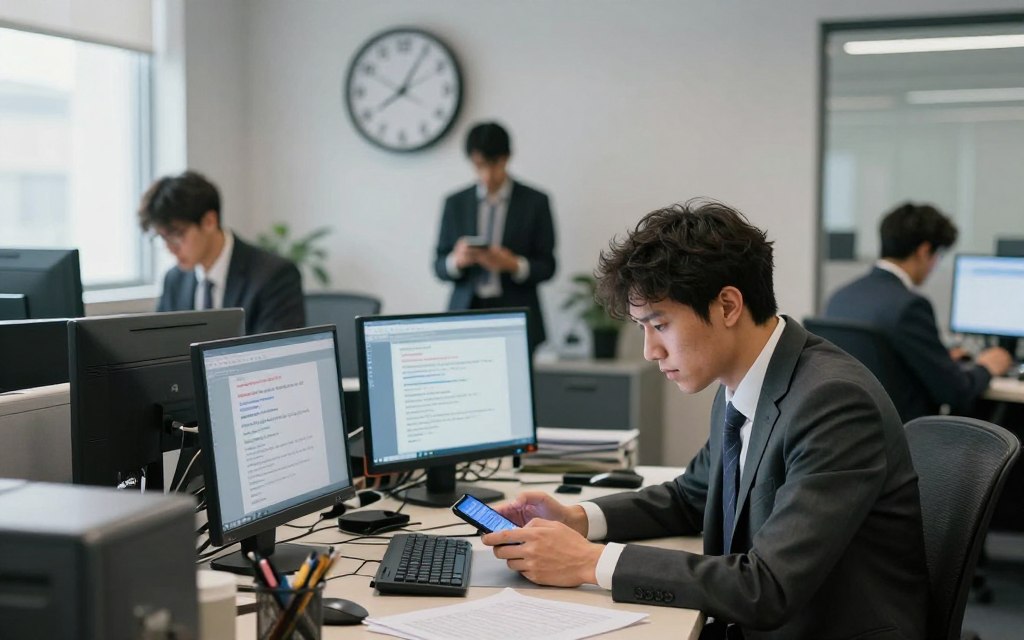
How we focus at work depends on the layout and culture. Open-plan offices boost teamwork but also interrupt us often. This affects our ability to focus.
Impact of Office Dynamics on Focus
Studies show open offices have their downsides. They lead to more chats and distractions. Yet, private or hybrid spaces help teams focus better.
Busy meeting schedules and constant messages break our day. Switching tasks often hurts our productivity. Companies need to find a balance between teamwork and deep work.
Good office designs include quiet areas and shared spaces. Using booking systems for focus rooms and setting rules for interruptions helps. Leadership support is key to making these changes work.
Remote Work and Attention Span
Working from home saves time and often offers quieter spaces for deep work. This can improve our focus when we control our environment.
But, remote work also brings distractions. Household tasks and endless tabs can break our concentration. Blurred lines between work and home add to our mental load, hurting productivity.
Hybrid work setups work well with the right norms. Setting focus times, using asynchronous communication, and clear signals in Slack or Teams help. Meeting-free days and calendar blocks also protect our time for deep tasks.
Training on managing our attention and clear expectations on when to respond help. Policies that support our well-being, like sleep and reasonable workloads, improve our performance and retention.
| Factor | Open Office | Private/Hybrid |
|---|---|---|
| Interruptions per day | High (casual conversations, visual) | Low to Moderate (scheduled collaboration) |
| Deep work capacity | Reduced (frequent context switching) | Improved (quiet zones, bookings) |
| Impact on productivity and attention | Fragmented focus, lower sustained output | Higher sustained output, better task completion |
| Best practices | Etiquette rules, sound masking, meeting limits | Focus bookings, asynchronous norms, meeting-free days |
| Remote work attention span effects | Not applicable | Varies: quieter deep work vs. home distractions |
Future Trends in Attention Span
As technology and policy debates change, the future of attention span depends on many factors. Designers, lawmakers, and users all play a role. There will be a constant battle between business models that grab our attention and our desire for healthier digital interactions.
At the same time, new tools will bring both challenges and solutions for staying focused.
Predictions for Digital Interaction
Future digital interactions will likely include more features that encourage mindful use. Think clearer screen time dashboards, built-in focus modes, and making it harder to get lost in endless feeds. Augmented and virtual reality could make our experiences more immersive, affecting our attention span.
But, AI can also help create quieter, less distracting experiences if used wisely.
The Role of Education in Attention Span Recovery
Education will play a key role in improving our attention span. Schools and universities need to teach digital literacy, attention management, and mindfulness early on. By training teachers and using adaptive learning tools, we can help students stay focused longer.
When schools work with parents and employers, these efforts can have a bigger impact.
While some may always prefer quick content, we can still make progress. By using strategies we’ve learned, pushing for better design and policies, and celebrating small victories, we can improve our focus in a world filled with distractions.