
Advertisement
Nearly 70% of consumers prefer devices that blend into their homes. Yet, most smart products still grab attention. This gap is driving a quiet revolution in invisible technology.
Invisible technology means tools and systems that don’t draw attention. They are designed to be unobtrusive or even invisible. This includes physical cloaking, user-interface invisibility, and background infrastructure.
Big names like Google, Apple, and Boston Dynamics are leading the charge. They’re working on advanced stealth technology and invisible innovations. Their goal is to make interactions feel natural and easy, like a Nest thermostat adjusting itself or an Apple wearable quietly tracking health data.
The benefits are clear: invisible technology makes things look better, is easier to use, and gets more people on board. It can even save energy and protect privacy. Next-generation invisible tech is changing how we design products and what we expect from them.
Understanding Invisible Technology
Invisible technology makes devices blend into our daily lives. It uses designs that are less noticeable or less intrusive. This includes small hardware, AI-driven software, and systems that focus on ambient interaction.
What Is Invisible Technology?
Invisible technology is about making products less noticeable. It includes interfaces like zero-UI and voice or gesture control. It also uses materials that bend or hide light and radio waves.
Examples of hardware are tiny sensors and actuators that are hidden. Software uses AI to adapt without needing commands. The design makes it so we rarely need to look at screens.
Key Components of Invisible Technology
Seamless experiences come from combining key elements. Tiny sensors and actuators are made by companies like Qualcomm and Texas Instruments. They enable small, low-power sensing.
Low-power wireless stacks, like Bluetooth Low Energy, keep devices connected without big batteries. AI and machine learning, through frameworks like Google TensorFlow, make devices behave smartly. Metamaterials and photonic structures, researched at Duke University, support advanced light control. Edge computing platforms, like NVIDIA Jetson, enable fast responses.
How It Differs from Conventional Technology
Invisible tech has a different design philosophy. It focuses on passive presence and automation. Conventional tech, on the other hand, emphasizes visible controls and direct input.
Invisible tech offers a better user experience and less friction. But, it might lack obvious control and raise privacy concerns. It’s used in smart thermostats, under-cabinet sensors, and even in military stealth coatings.
| Aspect | Conventional Technology | Invisible Technology |
|---|---|---|
| Interface | Visible screens, buttons, clear indicators | Zero-UI, ambient cues, hidden sensors |
| Power & Connectivity | Higher power, standard Wi‑Fi, frequent charging | Low-power wireless (BLE, Thread), energy-efficient components |
| Processing | Cloud-centric with remote latency | Edge computing with local inference (NVIDIA Jetson, Intel Movidius) |
| Sensing & Materials | Standard sensors, visible form factors | Miniaturized sensors (Qualcomm, Texas Instruments), metamaterials for cloaking |
| Behavior | User-driven, explicit commands | Context-aware automation using TensorFlow or Core ML |
| Applications | Traditional gadgets and visible devices | Invisible smart thermostats, adaptive textiles, optical cloaks, stealth coatings |
The History of Invisible Technology
Invisible technology has come a long way, from lab experiments to our homes. The 1950s to 1970s saw the start of radar-absorbing materials. These early steps paved the way for stealth technology.
Military programs at DARPA and research labs worked on making objects less detectable. But, consumer design took a different path. Braun and designer Dieter Rams focused on making products blend into our daily lives.
Later, embedded sensors became a game-changer. Microcontrollers and RFID tags made it possible for devices to hide in plain sight. This shift led to tech that disappears by design, not just by secrecy.
Early Innovations
Stealth research in the military showed the first signs of success. Radar-absorbing materials and shapes made aircraft and ships harder to detect. This work influenced commercial R&D, while designers made products less intrusive.
Early embedded systems and RFID tags from the 1980s and 1990s made sensing easier and cheaper. This laid the groundwork for future innovations.
Major Milestones
In the early 2000s, metamaterials opened up new possibilities. Researchers at Duke University and Imperial College London made waves by bending electromagnetic waves around objects. This sparked interest in cloaking devices beyond the lab.
Consumer tech hit a milestone with Nest’s thermostat in 2011. It aimed to blend into the home seamlessly. The rise of voice assistants like Amazon Alexa and Google Assistant further changed how we interact with tech.
Wearable sensors like Fitbit and Apple Watch became popular. They showed how health monitoring could be done discreetly. On-device AI and context-aware software made technology feel less distracting.
Future Predictions
Experts and labs foresee a future with adaptive materials and ambient computing. Devices will respond without needing explicit input, merging the physical and digital worlds. On-device AI promises to enhance privacy while keeping interactions subtle.
Research at MIT Media Lab and companies like Apple, Google, and Amazon focus on energy-efficient sensing and smarter models. Some aim to create practical optical cloaks. By 2030, we might see interfaces that are almost invisible, blending materials, sensors, and AI into everyday objects.
| Era | Key Development | Representative Names |
|---|---|---|
| 1950s–1970s | Radar-absorbing materials and stealth shaping | DARPA, U.S. defense labs |
| 1980s–1990s | Embedded microcontrollers and RFID | Early electronics firms, academic labs |
| Early 2000s | Metamaterials and cloaking experiments | Duke University, Imperial College London |
| 2010s | IoT mainstreaming and voice assistants | Nest, Amazon Alexa, Google Assistant |
| 2010s–2020s | Wearables and on-device AI | Fitbit, Apple Watch, MIT Media Lab |
| 2020s–2030 | Ambient computing, adaptive materials, privacy-focused AI | Apple, Google, DARPA |
Everyday Applications of Invisible Technology
Invisible tech is now in our homes, wearables, and phones. It makes devices less noticeable but more useful. This tech is all about being subtle and doing more without being seen.
Smart Homes and Appliances
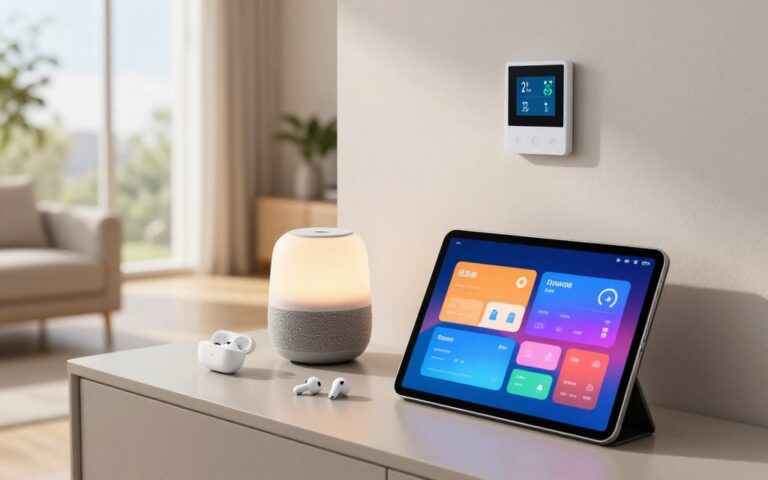
Smart thermostats like Nest adjust the temperature without showing much. They learn our habits to keep us comfy. Philips Hue lights change color based on the room’s mood, all without buttons.
Voice assistants like Amazon Echo let us talk to our devices. This makes controlling our homes easy and hands-free. Devices from different brands can now work together thanks to new tech standards.
Wearable Devices
Wearables like smart rings track our health without being seen. They monitor sleep and recovery without being bulky. Health patches and slim trackers do the same, keeping our data private.
Apple Watch has cool features like ECG and fall detection. These work quietly in the background. This way, our devices help us without needing constant attention.
Seamless Communication
Invisible tech makes our devices talk to each other smoothly. eSIM and always-on sync keep us connected without effort. Cloud services update apps automatically, so we don’t have to.
Features like Google’s Ambient Mode and Apple Continuity let devices work together. This makes switching between them easy and natural. It shows how invisible tech makes our lives easier.
This tech makes our lives more accessible and clutter-free. It automates tasks and helps us with daily chores. It’s all about making our lives better without being in the way.
Impact on the Environment
Invisible technology changes how we use energy in buildings, devices, and grids. Smart controls, low-power chips, and AI work quietly to cut waste. These advances include disruptive invisible solutions that make things more efficient without asking users to change habits.
Reducing Carbon Footprints
Smart thermostats like Nest from Google learn patterns and trim HVAC use. Adaptive lighting uses presence sensors to light only occupied zones. Building management systems coordinate ventilation, heating, and cooling to lower consumption in offices and malls.
Studies show smart controls can reduce building energy use by up to 20–30 percent in many cases. Commercial installations that combine sensors, predictive schedules, and demand response further shrink peak loads. Utilities and cities adopt these tools to meet climate goals while preserving comfort for occupants.
Sustainable Practices
Miniaturization cuts material needs, yet it raises e-waste risks when devices are short-lived. Major firms such as Apple, Samsung, and Google pursue recyclable materials and modular designs to ease repair and reuse. ENERGY STAR and EU eco-design rules push manufacturers toward longer-lasting, energy-efficient products.
Designing for repairability and upgrade paths slows replacement cycles. That approach reduces raw-material extraction and the carbon tied to manufacturing new units.
Innovations in Energy Efficiency
Ultra-low-power processors like ARM Cortex-M and chips from Nordic Semiconductor enable sensors and controllers to run for years on small batteries. Energy harvesting—small solar cells or kinetic harvesters—keeps devices working off-grid. Edge accelerators such as Edge TPU and the Apple Neural Engine move AI inference on-device, trimming cloud traffic and its energy cost.
Smart grids and demand-response platforms invisibly balance loads, match supply to demand, and integrate renewables. These systems rely on state-of-the-art invisible engineering to coordinate distributed resources and prevent wasteful overproduction.
Designers must watch for rebound effects when greater efficiency leads to more device use. Policies that favor repairable products and extended warranties help offset that risk. Emphasizing lifecycle thinking and circular-economy practices reduces long-term impacts.
| Area | Technology Example | Environmental Benefit |
|---|---|---|
| Home HVAC | Google Nest learning thermostat | Reduces heating/cooling energy by 10–15% on average |
| Lighting | Adaptive occupancy sensors | Cuts wasted lighting hours; lowers electricity demand |
| Edge Computing | Edge TPU, Apple Neural Engine | Reduces cloud data transfer and server energy use |
| Low-Power Devices | ARM Cortex-M, Nordic Semiconductor | Extends battery life; lowers replacement frequency |
| Product Design | Modular phones and recyclable materials | Decreases e-waste; improves material recovery |
| Grid Management | Demand-response and smart-grid platforms | Balances renewables; reduces peak fossil generation |
Responsible adoption pairs advanced stealth technology with durable design and repairable components. That mix keeps invisible benefits from creating larger footprints over time.
Invisible Technology in Health Care
Invisible technologies are changing how we get care. Remote sensors, small implants, and smart home tech make care less invasive. These tools let doctors monitor health without interrupting daily life.
Telemedicine Advances
Platforms like Teladoc and Amwell now offer remote monitoring and video visits. Home devices send health data automatically, so doctors can see trends before a visit. Medicare’s new policies have made these tools more common in clinics and hospitals.
Wearable Health Monitors
Devices like the Apple Watch and Dexcom monitors track health discreetly. Fitbit and Abbott offer FDA-cleared options for managing chronic diseases. This data helps detect problems early and reduces the need for clinic visits.
AI in Diagnosing Diseases
AI models help doctors in radiology and cardiology. Companies like Aidoc and Zebra Medical Vision analyze images. AI flags patterns in wearable data to detect issues and predict readmission risk. This speeds up diagnosis and helps manage risk continuously.
Privacy and Compliance
HIPAA rules ensure patient data is handled securely. Many systems use encrypted transmission and edge-based processing. This keeps data safe and meets clinicians’ needs for reliable, private data.
| Feature | Representative Brands | Clinical Benefit |
|---|---|---|
| Continuous glucose monitoring | Dexcom, Abbott | Better glycemic control, fewer hypoglycemic events |
| Wearable ECG | Apple Watch, Fitbit | Early detection of atrial fibrillation, outpatient monitoring |
| Adhesive health patches | Proteus-style OEMs, Abbott | Medication adherence tracking, long-term vitals |
| Radiology AI | Aidoc, Zebra Medical Vision | Faster image reads, prioritization of critical findings |
| Remote care platforms | Teladoc, Amwell | Expanded access, integrated remote monitoring |
New work combines wearable health monitors with stealthy sensor designs. Clinics are testing these innovations to improve care and reduce hospital visits. They aim to balance privacy and clinical validation.
The Role of Invisible Technology in Education
Invisible systems are changing how students learn and how teachers teach. Classrooms now use tools that help focus without distracting. This change is thanks to futuristic hidden tech and next-generation ghost tech working behind the scenes.
Enhancing Learning Experiences
Smart lighting adjusts to match attention cycles. Ceiling microphones and cameras auto-tune to the speaker. Augmented reality overlays appear only when needed, keeping things clear.
Google Classroom and similar platforms give teachers insights without interrupting. This helps students stay on track.
Virtual Learning Environments
Virtual classrooms need less setup now. Tools like auto-joining and background bandwidth optimization make remote classes seamless. Integrated whiteboards and platforms like Zoom and Microsoft Teams create collaborative spaces quietly.
This setup lets teachers focus on teaching, not tech issues.
Personalized Learning Platforms
Adaptive engines on platforms like Khan Academy tailor lessons to each student. Continuous assessment means lessons adjust in real time. This keeps learners engaged and progressing steadily.
Invisible tools help schools with reliable infrastructure close gaps. But, unequal access to internet and devices can leave some behind. Policy and investment are needed to address this.
| Area | Invisible Tech Role | Education Benefit |
|---|---|---|
| Classroom Environment | Smart lighting, auto-tuned audio, AR overlays | Improved focus and reduced distraction |
| Remote Instruction | Auto-join, bandwidth optimization, integrated whiteboards | Smoother lessons with less setup time |
| Learning Personalization | Adaptive algorithms and continuous assessment | Individual pacing and higher retention |
| Access & Equity | Low-friction tools that hide complexity | Broader participation when infrastructure exists |
| Challenges | Dependence on connectivity and devices | Risk of widening gaps without targeted investment |
Security and Privacy Considerations
Invisible tech raises new security and privacy questions. Devices blend into our lives, making choices about personal data and trust. Clear practices make these solutions safer and more convenient.
Data Protection Measures
Use end-to-end encryption for messaging and web traffic. Keep sensitive data on your device to reduce cloud risks. Apple’s Secure Enclave and Trusted Platform Module chips protect your data.
Follow laws like GDPR and U.S. sectoral privacy laws. Google and Apple set strong privacy defaults. Regular updates and secure boot reduce vulnerability risks.
Ethical Implications
Invisible data collection can be tricky. Surveillance risks grow without clear notice. IEEE’s Ethically Aligned Design calls for transparency and user control.
Designers should document data flows and limit data retention. Ethics review boards and privacy assessments help spot issues. Public trust can be lost without clear consent.
Balancing Convenience with Safety
There are trade-offs between seamless service and user control. Offer clear notifications and privacy settings. Periodic audits and security certifications build trust.
Make privacy defaults standard. Use techniques like differential privacy and on-device learning. Clear interfaces encourage informed choices without cluttering daily life.
Real-world breaches show why safeguards are crucial. Learn from these incidents by enforcing least-privilege access and monitoring behavior. Plan for incident response.
| Area | Practical Measures | Benefits |
|---|---|---|
| Encryption | Signal protocol, TLS, hardware key storage | Protects data in transit and at rest |
| On-Device Processing | Edge ML, local inference, limited telemetry | Reduces cloud exposure, improves latency |
| Hardware Security | Secure Enclave, TPM, secure boot | Prevents key extraction and tampering |
| Regulation & Policy | GDPR-aligned design, sector laws, privacy sandboxes | Sets minimum protections and user rights |
| Ethics & Transparency | Impact assessments, readable notices, opt-in controls | Maintains trust and informed consent |
| Verification | Third-party audits, certifications, penetration testing | Demonstrates compliance and reduces risk |
The Economic Impact of Invisible Technology
Invisible technology is changing how we work and spend money. It’s creating new markets and jobs, but it also brings challenges. Next-generation ghost tech is moving from labs to everyday use, affecting businesses and communities.
Job Creation and Transformation
There’s a growing need for AI engineers and embedded systems developers. Materials scientists are also in demand for their work on adaptive surfaces. These changes are creating new roles and opportunities.
Security teams are expanding to protect data, and UX designers are working on invisible interfaces. This shift might lead to job losses in certain areas. Companies and schools need to invest in training to help people adapt.
Cost-Effectiveness for Businesses
Automation is making tasks more efficient and saving money. Predictive maintenance is reducing downtime. Companies like GE and Siemens are seeing big improvements in their operations.
Retailers are using RFID and smart shelving to reduce losses. Logistics firms are cutting down on spoilage with smart sensors. Manufacturers are improving their lines with IIoT sensors, saving on costs.
New Market Opportunities
New products are emerging, like privacy-focused devices and health-monitoring services. Adaptive materials are being used in architecture for durable, responsive buildings. Enterprise platforms are providing background intelligence for workplaces.
Investors are pouring money into stealth startups working on invisible tech. This funding is helping launch new products and services. It’s creating opportunities for recurring revenue.
Economic Challenges
Developing invisible technology is expensive, and finding the right parts can be hard. This can slow down the introduction of new products. Some industries are benefiting more than others, causing uneven growth.
Leaders need to invest in infrastructure and training to manage these changes. With careful planning, invisible technology can make things more accessible and affordable for everyone.
Challenges Facing Invisible Technology
Invisible tech offers big benefits for users and businesses. But, it faces many challenges in engineering, trust, and rules. Solving these will decide how advanced stealth and cloaking tech become part of our lives.
Technical limitations
Optical cloaking faces physical limits. It works best in narrow angles and bandwidths. Battery life is also a challenge for always-on sensors.
Computers struggle to keep up with real-time tasks. Sensor noise and accuracy issues are common in busy or reflective places.
Teams at MIT, Stanford, and companies like Raytheon are working hard. They’re improving materials and power systems. But, progress is slow.
Public perception and acceptance
Many fear invisible tech for surveillance or automated decisions. They worry about losing control and algorithms being too complex. Studies show people want clear, manual controls.
Early users might accept risks. But, for widespread use, tech needs simple explanations and user choices.
Regulatory hurdles
Rules vary by state and agency. California and Virginia have different privacy laws. The FAA and FCC have rules for wireless and airborne tech.
Medical devices with hidden sensors must get FDA approval. Export rules also limit certain tech used by defense firms.
Working together can ease these challenges. Regulators, companies, and groups can find common ground.
Practical ways to move forward
- Start with controlled pilots and publish test results.
- Give users clear controls over data collection.
- Engage the public with clear explanations.
- Develop standards for testing and safety.
By combining engineering, clear communication, and regulation, we can bring hidden tech into our lives safely.
Future Innovations to Watch
Research labs and industry leaders are moving fast. MIT and Stanford publish frequent papers on materials and sensing. DARPA funds practical field trials. Apple and Google back low-power AI for devices that blend into daily life. These efforts push state-of-the-art invisible engineering into real products.
Emerging Trends
Pervasive edge AI will let devices act locally, reducing latency and data flow. Consumers will notice smarter phones and home hubs that respond without cloud lag.
Metamaterials move from labs into consumer goods. Expect lighter coatings and lenses that hide antennas or reshape signals.
Smart fabrics will embed invisible sensors into clothing. Health and activity tracking will feel natural, not intrusive.
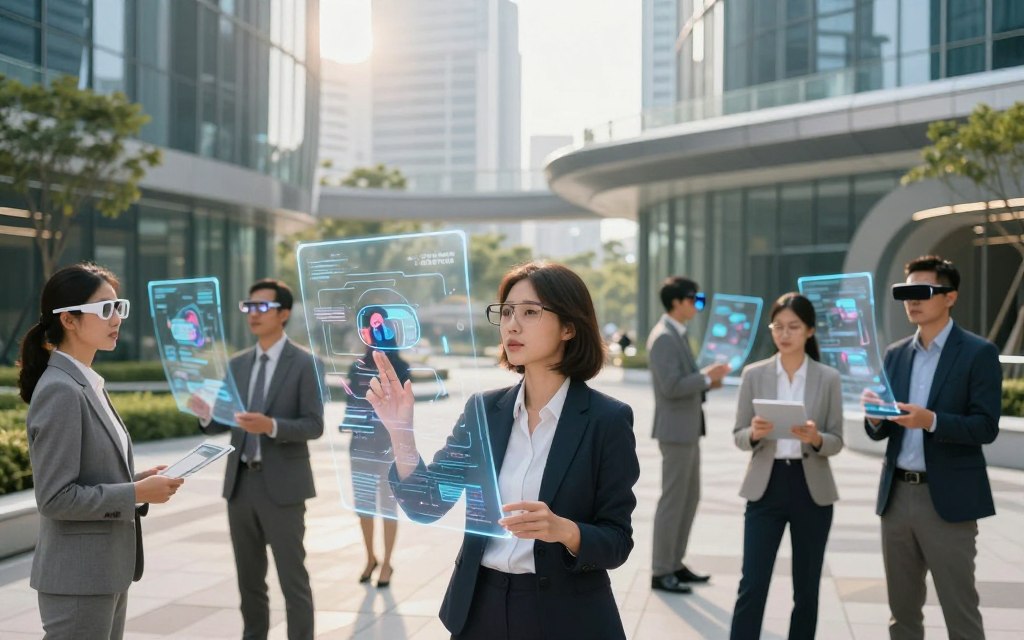
AR will merge with ambient computing to show context only when needed. Interfaces will appear in real space, then vanish to keep scenes uncluttered.
Potential Breakthroughs
Broadband optical cloaks that work for narrow, practical tasks are closer to reality. These will protect privacy in niche applications.
Advances in batteries and energy harvesting promise always-on sensors. Small devices may run for years on harvested light, vibration, or thermal gradients.
Compact quantum sensors could provide new detection modes for navigation and medical diagnostics. They will offer sensitivity beyond classical limits.
Standards like Matter will let devices coordinate quietly. Interoperable protocols will help products from different brands act as a seamless system.
Predictions for 2030
Homes and cars will adopt ambient interfaces as mainstream features. Controls will appear when you look at a surface and fade away afterward.
Invisible health monitors will support chronic care. Continuous, subtle tracking will shift some management from clinics to daily life.
Buildings will optimize energy use in real time, with sensors and controls woven into structure and glass.
Privacy-by-design norms will strengthen. Regulators and firms will set clearer rules so next-generation ghost tech gains trust while scaling.
| Area | Near-term (2025) | Mid-term (2028) | Target 2030 |
|---|---|---|---|
| Edge AI | Prototype devices with local inference | Wider consumer deployment in hubs | Ubiquitous low-latency assistants |
| Metamaterials | Lab demos and niche products | Commercial coatings and optical parts | Integrated in wearables and architecture |
| Smart Fabrics | Research garments and pilots | Retail clothing with sensors | Everyday apparel with embedded monitoring |
| Energy | Improved micro-batteries | Hybrid harvesting plus storage | True always-on sensors powered by environment |
| Sensors | Compact MEMS and optics | Early quantum sensor models | High-sensitivity compact quantum units |
| Standards | Industry pilots like Matter | Broader adoption across brands | Interoperable ecosystems enabling cutting-edge invisible innovations |
| Privacy & Governance | Policy debates and trials | Stronger best practices | Robust privacy-by-design norms for next-generation ghost tech |
How to Embrace Invisible Technology in Daily Life
Adopting invisible technology is simple. Start with small steps. Choose devices that are easy to use and respect your privacy. This makes life easier and keeps you in control.
Tips for Integration
Start with a single smart device. Try a Nest thermostat, Philips smart lighting, or an Apple HomeKit accessory. Look for products from Google, Apple, and Philips that protect your privacy.
Keep your IoT devices separate from your main network. Use certified installers for complex setups.
Staying Informed About Innovations
Stay updated with tech news from The Verge and Wired. Also, read MIT Technology Review and check out Nature and IEEE Spectrum. Follow Google AI and Apple Newsroom for the latest.
Look for government advice from NIST too. This helps you keep up with new tech and privacy rules.
Making Informed Choices
Compare devices based on battery life and updates. Check if they have third-party security checks. Look for standards like Matter and Thread.
Consider the environmental impact too. Choose devices that are easy to repair and recycle. Make sure they offer clear controls and security updates.
Take it slow when trying new tech. Join digital literacy programs and ask about privacy before buying. This way, you enjoy new tech without losing control or harming the environment.