
Advertisement
U.S. households now have more than three smart gadgets per person on average. This shows how fast connected technology has become a part of our lives.
Devices like Amazon Echo, Google Nest, and Apple Watch are learning our habits. They use sensors, data, and AI to adjust things for us. This means they can change the temperature, light settings, and even remind us to stay healthy without us asking.
This article will look at the world of smart devices in the U.S. We’ll talk about different types of devices, how they collect data, and how they make our lives easier. We’ll also cover voice interfaces, smart homes, health uses, and how these devices can make us more productive.
Advances in machine learning and better connectivity are making devices smarter. As people want more convenience and to save energy, manufacturers are creating products that are easier to use and more efficient.
By the end of this, you’ll know how smart devices learn and the privacy issues they raise. You’ll also see the benefits they bring to our daily lives. And you’ll learn how to use these devices in a way that’s safe and smart.
The Rise of Smart Devices in Our Daily Lives
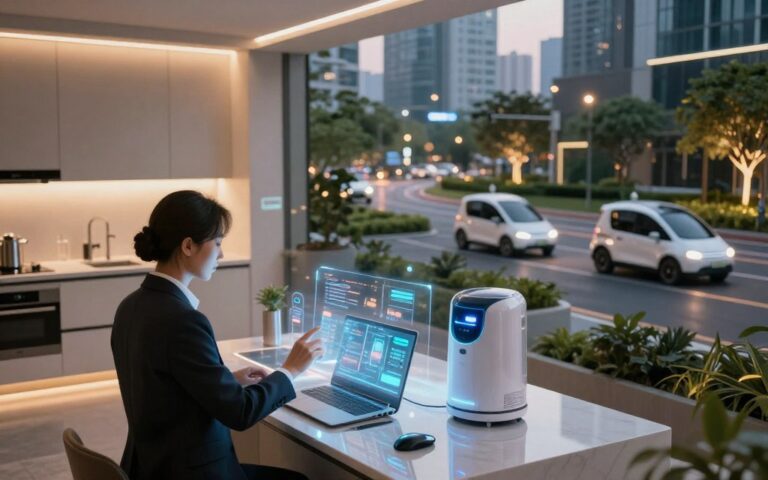
Smart devices have become essential in many American homes. They use sensors, processors, and actuators to gather data and act on it. These tools offer simple conveniences and complex automation in both homes and businesses.
Definition and Types of Smart Devices
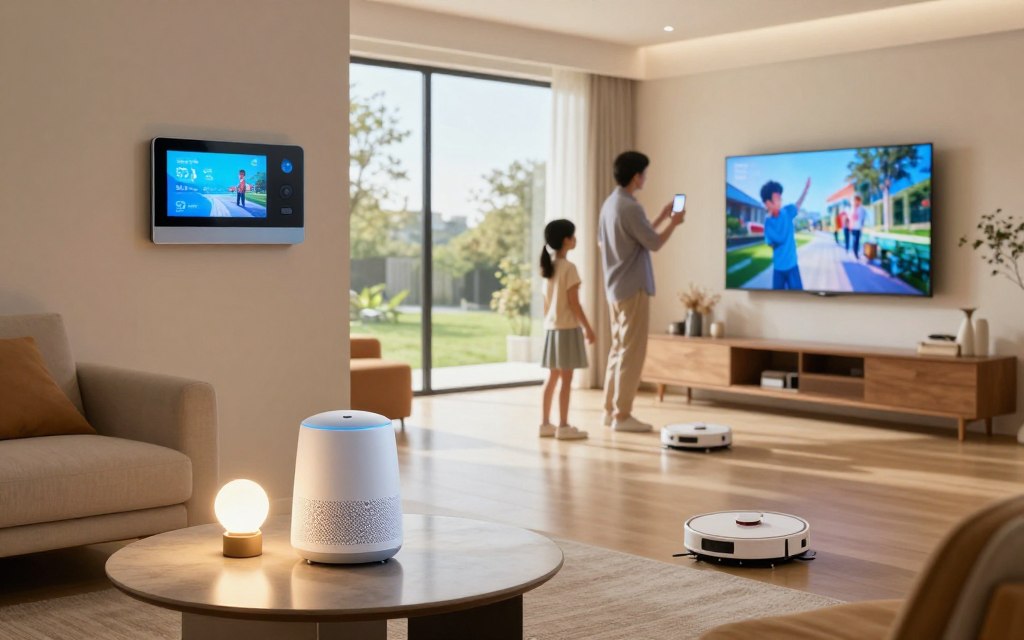
A smart device is any connected item that can sense and compute. It responds to inputs or environmental cues. Examples include voice speakers like Amazon Echo and Google Nest, wearables like Apple Watch and Fitbit, and smart appliances like Samsung Family Hub refrigerators and LG washers.
Security gear and lighting are also smart devices. Ring and Arlo offer cameras, while Philips Hue leads in connected lighting. IoT sensors monitor air quality, water leaks, and occupancy for automated routines.
The Role of AI and Machine Learning
AI and machine learning turn data into useful actions. On-device models handle quick tasks and protect privacy. Edge computing enables phones and hubs to process data locally for fast responses.
Cloud AI handles heavier tasks and supports long-term learning. Platforms on Google Cloud and Amazon AWS enable pattern recognition, predictive actions, and personalization across devices.
Importance of Connectivity and Integration
Reliable connectivity makes device networks useful. Wi‑Fi, Bluetooth, Zigbee, and Z‑Wave are common. The Matter standard is emerging to improve compatibility between brands.
Hubs and ecosystems are key for seamless scenes. Apple HomeKit, Google Home, and Amazon Alexa connect devices for unified control. This integration drives the adoption of smart home technology and expands the internet of things into daily life.
| Category | Representative Brands | Primary Function |
|---|---|---|
| Voice & Assistants | Amazon Echo, Google Nest | Voice control, information, home hub |
| Thermostats | Nest, Ecobee | Climate control, energy savings |
| Wearables | Apple Watch, Fitbit | Health tracking, notifications |
| Smart Appliances | Samsung Family Hub, LG | Connected cooking, laundry, refrigeration |
| Security & Cameras | Ring, Arlo | Surveillance, alerts |
| Lighting | Philips Hue | Scene lighting, automation |
| IoT Sensors | Various manufacturers | Environmental monitoring, automation triggers |
How Smart Devices Gather User Data
Smart gadgets and devices collect signals to learn our habits and offer personalized experiences. The internet of things connects home hubs, wearables, and appliances. This network creates detailed data for personalization, diagnostics, and improving features.
Passive Data Collection Methods
Many devices use sensors to collect data without needing our action. They have motion sensors, GPS, and more. A thermostat logs temperature and when we’re home to learn our schedule.
Continuous logging shows long-term patterns. Event-based logging records specific moments, like when we open a door. Both methods help devices predict what we need.
Active User Input and Preferences
We give devices direct signals through app settings and voice commands. Smart speakers learn from our voice commands. Wearables ask for our height and weight to better understand our health.
Turning on a light or adjusting the thermostat also helps. This creates examples for devices to learn from. Getting feedback helps devices learn faster and more accurately.
Privacy Concerns and Data Security
Data includes our habits, usage logs, and health metrics. Where this data is stored varies by vendor. Some data stays on the device, while others go to the cloud or third-party platforms.
Risks include unauthorized access and tracking. Incidents with cameras and home security systems have led to updates and scrutiny. Breaches in IoT devices highlight the need for better security.
Industry practices aim to reduce these risks. Encryption and secure boot protect data. Regular updates and two-factor authentication block attacks. Users can keep more data private by choosing local processing and app controls.
User-Centric Design: Enhancing Usability
Design that focuses on people makes smart devices easier to use. Clear interfaces and fast responses make technology feel natural. This design cuts frustration and helps more people use it, no matter their age or ability.
Importance of Intuitive Interfaces
Simple mobile apps make controlling smart gadgets easy. Voice control through Siri and Google Assistant is handy when you can’t touch the screen. Visible LEDs and tactile buttons give instant feedback, making it easier to use.
Apple and Google have guidelines for making apps easy to use. These guidelines help ensure apps are consistent and accessible across different devices.
Customization Features for Individual Needs
Customization lets users tailor device behavior to their daily routines. Features like routines and geofencing adjust device actions based on location and time. Accessibility settings, like larger text, help more people use devices.
Products like Nest thermostats and Ecobee show how personalization improves comfort. When users can customize their devices, they’re happier and more likely to use them.
Feedback Systems for Continuous Improvement
Feedback channels help manufacturers improve their products. In-app feedback, telemetry data, and community forums show what needs work. A/B testing helps find the best interface for users.
Firmware updates keep devices up-to-date based on user data. Clear reporting and responsive support ensure user feedback leads to better products. This makes the user experience even better.
Personalization: Tailoring Experiences
Smart devices are changing from one-size-fits-all to user-aware helpers. They learn our routines and respond to our context. This makes them more useful and less intrusive.
AI algorithms predict what we want and when. They use collaborative filtering to suggest music or content. Supervised learning maps our behavior to likely next actions.
Reinforcement learning tweaks device behavior over time. It rewards useful outcomes. These methods create personalized thermostat schedules, music suggestions, and commute-aware notifications.
Wearables and home sensors track our habits. They detect sleep, lighting, and exercise patterns. An Apple Watch or Fitbit logs activity and suggests healthier choices.
Customized recommendations must be relevant. Smart recommendations include energy-saving tips and health alerts. Too many alerts cause fatigue. Context awareness and user feedback loops keep suggestions timely and welcome.
Privacy-preserving personalization protects user data. Techniques like differential privacy add noise to shared statistics. On-device model training and federated learning let models learn from many users without centralizing raw personal data.
The table below compares common algorithm types and their uses in smart devices.
| Algorithm Type | Main Strength | Example Use |
|---|---|---|
| Collaborative Filtering | Leverages patterns across users to suggest items | Music suggestions on smart speakers and playlist curation |
| Supervised Learning | Predicts labeled outcomes from past examples | Predictive thermostat schedules based on historical comfort settings |
| Reinforcement Learning | Adapts behavior through trial and reward | Smart lighting adjustments that optimize comfort and energy use |
| Federated Learning | Trains models across devices without centralizing raw data | On-device personalization for keyboards and voice models |
| Differential Privacy | Protects individual data in aggregated results | Aggregated usage trends for product improvement without exposing users |
Voice Assistants and Natural Language Processing
Voice-driven interfaces have evolved from simple keyword spotting to complex, conversational agents. Companies like Amazon, Google, and Apple have led the way. They’ve made voice assistants understand intent and hold multi-turn dialogues.
Deep learning and transformer models have improved accuracy. This lets smart devices understand more natural speech patterns.
The Evolution of Voice Recognition
Early speech systems could only respond to a few commands. Now, thanks to natural language processing, assistants can understand context and follow-up questions. Amazon Alexa, Google Assistant, and Apple Siri show how transformer models enhance intent parsing and reduce errors.
On-device processing is starting to complement cloud models. This reduces latency and preserves privacy for many routine requests. It also enables smart gadgets to run offline features with faster response times.
Enhancing Interactions with Users
Context retention makes conversations feel less robotic. Voice assistants can remember prior turns, adapt to user preferences, and offer personalized voices. Multilingual support widens reach for global households using connected technology.
Integration with home automation systems lets users trigger scenes and routines. Smart devices from Nest, Philips Hue, and Sonos can act on voice cues. They can adjust lighting, play music, or set temperatures.
Limitations and Future Improvements
Ambient noise, strong accents, and homonyms still cause misunderstandings. Always-listening microphones raise privacy concerns when false activations occur. Cloud processing can add latency for complex queries.
Future improvements aim at better contextual understanding and emotional tone detection. On-device natural language processing will reduce privacy exposure and speed responses. Multimodal interactions that combine voice with screens should make exchanges richer. Tighter integration with user profiles will let smart gadgets and connected technology deliver more natural, personalized dialogues.
| Aspect | Current State | Near-Term Improvement |
|---|---|---|
| Accuracy | High for common phrases; lower with noise or accents | Transformer models and expanded datasets |
| Latency | Cloud processing can delay responses | On-device NLP for faster reactions |
| Privacy | Concerns from always-listening microphones | Local processing and clearer user controls |
| Contextual Understanding | Limited multi-turn memory in many devices | Longer context windows and profile-aware replies |
| Integration | Works with popular smart devices and services | Deeper routines across more connected technology |
Smart Home Devices: Redefining Living Spaces
Smart home technology is changing how we live. Small sensors, smart speakers, and connected lighting make routines simpler. These systems bring convenience and safety to everyday life while opening new paths for energy efficiency.
Integration with Home Automation Systems
Devices join scenes and routines across platforms like Apple HomeKit, Google Home, and Amazon Alexa. Bridging hubs such as Samsung SmartThings help connect products that would not communicate. The Matter standard is gaining traction to make cross-vendor setups smoother and reduce fragmentation.
Energy Efficiency and Sustainability
Smart thermostats from Nest and Ecobee, smart plugs, and connected appliances are designed to cut waste. Scheduling, demand-response features, and real-time feedback let households lower consumption and save on bills. Utilities often offer smart-home rebate programs and pilot initiatives for grid-interactive efficient buildings.
Real-world Scenarios of Smart Homes
Morning routines can raise blinds, start a coffee maker, and nudge the thermostat to comfort settings before anyone leaves the bedroom. Leaving for work can trigger door locks, arm security cameras, and reduce HVAC output. In eldercare, motion sensors and smart devices monitor activity and alert caregivers when patterns change.
Manufacturers and utilities publish case studies that show measurable savings and improved comfort. Pilots often highlight how a single smart appliance or a simple routine produces clear benefits in real homes.
Adoption still faces hurdles. Installation complexity, interoperability gaps, and upfront costs keep some households from upgrading. These barriers are shrinking as standards improve and more affordable smart devices enter the market.
Health and Wellness Applications of Smart Devices
Smart devices are changing how we track and manage health. They use small sensors and constant connection to show trends in real time. This section explores wearable technology, how we move from raw data to personalized health insights, and how device data is used in clinical care.
Wearable Technology in Health Monitoring
Fitness trackers and smartwatches from Apple, Fitbit, and Garmin track heart rate, sleep, daily activity, SpO2, and falls. Apple Watch has FDA-cleared ECG and alerts for irregular rhythms. AliveCor’s KardiaMobile offers a personal ECG for doctors to review.
These devices help monitor health continuously without needing clinic visits. But, battery life, sensor placement, and motion artifacts can affect readings. Manufacturers publish studies to help doctors understand data quality.
Personalized Health Insights and Alerts
Wearables turn raw data into clear, actionable feedback. They show sleep scores, recovery metrics, and training load as daily summaries and trends. Algorithms can alert for irregular heart rhythms or unusual SpO2 drops.
AI models compare a user’s baseline with new data to predict trends and identify early signs of deterioration. They offer personalized health recommendations, like activity goals and sleep tips. Timely alerts can prompt faster medical evaluation for early detection.
Integration with Healthcare Providers
Platforms like Apple HealthKit and Google Fit enable data sharing with electronic health records and clinician portals. Remote patient monitoring programs and telehealth services use device streams for chronic disease management. Vendors like Epic and Cerner offer integrations to bring patient-generated data into workflows.
Clinical adoption faces challenges: data validity, clinician time, reimbursement rules, and workflow fit. When device data becomes part of care, HIPAA and data governance rules apply. Health systems need strong consent processes, secure data transfer, and clear policies on using wearable data in clinical decisions.
| Aspect | Examples | Clinical Relevance |
|---|---|---|
| Devices | Apple Watch, Fitbit Charge, Garmin Forerunner, KardiaMobile | Continuous ECG, heart rate, SpO2, activity, fall detection |
| Insights | Sleep scores, recovery metrics, irregular rhythm alerts | Support early intervention and personalized care plans |
| Integration | Apple HealthKit, Google Fit, EHR APIs (Epic, Cerner) | Enables remote monitoring, telehealth follow-up, clinician review |
| Regulation & Privacy | FDA-clearances, HIPAA requirements, data governance | Determines when and how device data can be used in care |
| Challenges | Data accuracy, workflow burden, reimbursement | Must be addressed for scalable clinical adoption |
The Impact of Smart Devices on Productivity
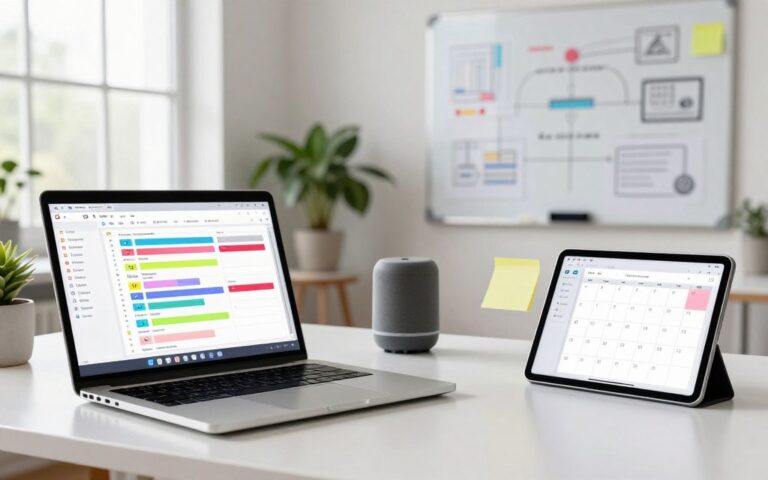
Smart devices are changing how we work. They mix technology with our daily lives to make remote work better. From simple sensors to complex hubs, they connect calendars, lights, and more.
Remote teams use displays and cameras to feel closer. Devices like Google Nest Hub Max and Amazon Echo Show make video calls easy. They also show calendars and documents.
Conferencing cameras and IoT integrations adjust lights and sound for better calls. They make sure everything is perfect for meetings.
Calendar-aware devices change lights and silence alerts during meetings. AI scheduling helps find the best times for meetings. It even solves conflicts without emails.
Presence sensors turn on Do Not Disturb modes. This shows when someone is busy. It helps keep work focused.
Smart phones and wearables have focus features too. They silence notifications and adjust lights for better concentration. This helps people work deeper and longer.
But, there are downsides. Too much automation can take away control. It also raises privacy concerns when devices track our habits. Too many notifications can be overwhelming.
It’s important to find a balance. Using smart technology wisely keeps teams productive. It also respects user control and privacy.
Smart Devices and Data Privacy Regulations
Smart gadgets and connected technology have pushed regulators to act. Rules in the United States and abroad shape how manufacturers build features, collect information, and report breaches. Users and companies watch legal updates closely as laws evolve to address internet of things risks.
Overview of Current Regulations
The California Consumer Privacy Act and the California Privacy Rights Act require notice, access, and deletion for personal data. The European Union’s GDPR sets strict consent and data minimization standards that affect global vendors like Apple and Samsung. COPPA protects children’s data on devices aimed at minors. Sector rules such as HIPAA apply when health data from wearables or smart home monitors touches medical care.
Federal efforts include the IoT Cybersecurity Improvement Act, which sets baseline security expectations for government-purchased devices. Companies respond by patching vulnerabilities and publishing security practices to meet procurement rules and market demand for safer products.
User Rights and Data Transparency
Consumers now have clear rights: access to the data held about them, deletion requests, and opt-outs from behavioral profiling. Privacy dashboards from Google and Apple give users control over permissions and on-device processing options that limit cloud exposure.
Device labeling initiatives seek to inform buyers at purchase about default security settings and update commitments. These labels and plain-language policies aim to make data privacy choices easier for everyday users of smart devices and smart gadgets.
Future Trends in Data Legislation
Expect stronger mandates on secure-by-default settings, mandatory vulnerability disclosure, and longer support windows for security updates. Lawmakers are discussing a federal privacy framework in the U.S. to unify state patchwork laws and reduce compliance complexity for makers of connected technology.
Regulatory shifts will likely require more on-device processing to limit data flows, stricter supply-chain security checks, and clearer accountability for third-party integrations in the internet of things ecosystem.
| Area | Current Focus | Likely Near-Term Change |
|---|---|---|
| Consumer Rights | Access, deletion, consent (CCPA/CPRA, GDPR) | Standardized federal opt-out and portability rules |
| Security Standards | Baseline for government devices (IoT Act) | Secure defaults, mandatory disclosure of vulnerabilities |
| Children’s Data | COPPA limits collection on kids’ devices | Tighter verification and labeling for child-targeted smart gadgets |
| Health Data | HIPAA for clinical contexts | Expanded guidance for wearables sharing with providers |
| Vendor Practices | Transparency reports, privacy dashboards | Mandatory disclosure of data flows and update lifespans |
Future Trends in Smart Device Technology
Smart devices are changing fast thanks to new tools and networks. We’ll see better connections between home devices, wearables, and public systems. The future will bring more convenience and smarter choices.
Emerging Technologies Shaping the Future
Edge AI and federated learning let devices learn without sending data to the cloud. This keeps data private and makes devices respond faster.
Better sensors will give devices a clearer picture of their surroundings. Multimodal interfaces will make interactions feel natural, combining voice, vision, and gesture.
LPWAN standards like LoRaWAN and NB-IoT are key for smart cities. They help sensors use less power, opening up new uses in public and commercial spaces.
The Role of 5G in Smart Device Connectivity
5G brings lower latency, more bandwidth, and better reliability. This power supports real-time analytics for AR/VR and smooth video for home security.
Dense areas like apartments or factories will benefit from private 5G slices. This ensures devices work well together, helping businesses in healthcare and manufacturing.
Predictions for Smart Device Adoption
Work on interoperability, like Matter, will make it easier for brands to work together. Lower costs and more uses will make smart devices more common in homes.
Healthcare monitoring, eldercare, and energy management will see the most growth. Expect more remote patient tracking and smart home energy systems in the next five years.
As more devices are adopted, privacy and supply chain issues will remain. We need standardized security to protect users and data across the internet of things.
The Ethical Dimension of Smart Devices
Smart devices make our lives easier and more fun. They learn our habits and help us stay on track. But, they also raise big questions about privacy and fairness.
Balancing Convenience with Privacy
We often give up some privacy for the benefits of smart devices. This can lead to ads that feel too personal and choices that feel forced. It’s important to know what we’re agreeing to.
Designers should make it easy to say no and explain how data is used. This way, we can enjoy the benefits without losing our freedom.
Algorithmic Bias in Device Responses
How devices react is shaped by their training data. If this data is biased, devices might not understand us right. Studies show that voice assistants and health apps can be unfair to certain groups.
To fix this, devices need to be tested with diverse groups. Regular checks can help ensure everyone gets fair treatment.
Responsibility of Developers in Creating Safe Devices
Developers have a big role in making devices safe and fair. They should design with privacy and security in mind. This means following strict guidelines and being open about how data is used.
Companies like Google and Apple are leading the way. They show how to balance policy, engineering, and education. This helps make the whole industry better.
| Ethical Focus | Practical Steps | Expected Benefit |
|---|---|---|
| Privacy | Clear consent dialogs, simple opt-outs, data minimization | Greater user trust and reduced misuse risk |
| Algorithmic Fairness | Diverse training sets, bias audits, outcome monitoring | More accurate recognition and equitable service |
| Security | Encryption, regular updates, threat modeling | Lower breach risk and safer user data |
| Transparency | Readable data policies, model documentation, incident reports | Informed users and clearer accountability |
| Governance | Independent audits, regulatory compliance, user feedback loops | Stronger public oversight and policy alignment |
Smart devices change how we live and work. They bring benefits but also raise big questions. We need to talk about this and make sure they help us, not control us.
Conclusion: The Future of Smart Devices and Human Interaction
Smart devices and connected technology are changing our lives. They collect data, use AI for better experiences, and make interactions easier with voice assistants. Wearables and health apps help us stay healthy, and smart devices make our lives more convenient.
But, the internet of things also raises important privacy and ethical issues. We need to pay attention to these concerns.
U.S. consumers can take steps to protect themselves. Check your privacy settings, choose devices that keep data local, and pick brands with clear update policies. Segment your home network, use two-factor authentication, and be careful with health data.
These actions can make your connected technology safer and more useful for your family.
Looking to the future, AI, 5G, and standards like Matter will make things better. Stronger rules and better design will help protect our data. Stay updated, think about privacy, and choose devices that fit your values and needs.
The future of the internet of things looks bright if we all work together. It should be responsible and reliable.