

Advertisement
Forty percent of adults learn new job skills on their own time each year. This shows that fast, practical learning is key.
This article shares learning strategies for busy adults. These strategies include cognitive, metacognitive, behavioral, and resource-based methods. They help improve understanding, memory, and practical use of what you learn.
Adults have a lot on their plates, like work and family. But, they also have valuable experience that can help them learn faster. That’s why learning methods that are practical and self-directed are so important.
By the end of this article, you’ll know how to study better, remember more, and manage your time well. We’ll use research from the Association for Psychological Science and Malcolm Knowles’ andragogy to show you effective learning techniques. You’ll also learn about memory strategies that work.
The advice here is friendly and aimed at U.S. adults. It’s designed to help you succeed in school and at work, even when you’re busy. Keep reading for tips that will make a difference in your learning journey.
Understanding the Importance of Learning Strategies
Learning strategies are key for adults to learn and use new information. Short, simple methods help save time and improve memory. Teachers and learners who use proven methods see better results in tests and real-life tasks.
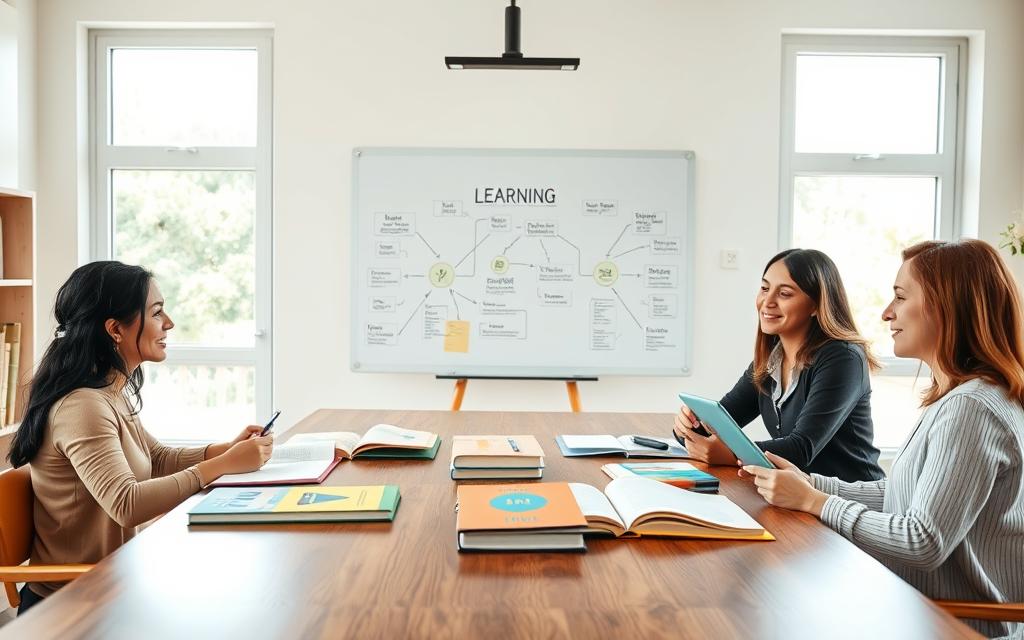
Here are some reasons why choosing the right methods and matching study plans with adult needs is important.
Why Learning Strategies Matter
Using smart study methods cuts down on wasted time and boosts memory. Techniques like retrieval practice and spaced repetition are backed by science. Active learning beats passive reading in keeping information in mind.
Effective strategies help apply what you learn in new situations. This is crucial for career advancement and solving problems at work. Structured methods improve performance in both tests and practical tasks.
- Retrieval practice strengthens recall by forcing learners to pull information from memory.
- Spaced repetition spaces review and boosts retention across weeks and months.
- Active learning techniques, such as practice tasks and self-testing, increase mastery more than rereading.
Adult Learning Principles
Malcolm Knowles’ andragogy shows what makes adult learners different. Adults are self-directed, bring life experience, focus on goals, and want practical use. These principles guide how to design courses and study plans.
Self-directed learning lets adults set goals, plan steps, and track progress. Tools that help with planning and reflection boost independence and success.
Experiential models, like David Kolb’s cycle, work well with problem-based learning. Learners benefit most when study routines include hands-on experience, reflection, thinking, and active testing. Use these tactics to make study sessions relevant and effective.
Different Types of Learning Strategies
Choosing the right method for learning helps adults save time and effort. There are three main ways: visual, auditory, and kinesthetic. Each uses senses to learn and remember information better.
Experts say we shouldn’t stick to just one “learning style.” Instead, mix different methods. This makes learning stick better and helps us apply what we’ve learned.
Visual Learning Strategies
Visual learning turns complex ideas into simple pictures. Use diagrams, charts, and infographics to understand concepts. Tools like Canva and Lucidchart make creating visuals easy.
Flashcards with images help remember information. Dual-coding theory shows that pictures and words together improve memory. Try Anki with images to boost recall.
Auditory Learning Strategies
Listening and speaking help solidify learning through sound. Record lectures and narrate study notes. Joining discussions helps practice speaking out loud.
Podcasts and audio content keep topics fresh in your mind. Otter.ai can transcribe audio for easy searching. Songs and rhymes make learning fun and memorable.
Kinesthetic Learning Strategies
Hands-on activities connect theory to action. Simulations and role-play build muscle memory. Labs and workshops offer direct experience with ideas.
Using gestures and working on projects strengthens learning. Interactive courses often include labs. Use simulation software or physical kits to make learning real.
Use a mix of visual, auditory, and kinesthetic learning. Add techniques like spaced practice and retrieval to make learning strong. This approach adapts to different subjects and situations.
Setting Learning Goals
Clear goals help adults focus and use their time wisely. They guide attention, direct resources, and boost persistence. This is key to learning well. It’s important to know the difference between outcome and process goals.
SMART Goals Framework
The SMART goals framework makes vague plans clear. Specific targets help avoid confusion. Measurable checkpoints show progress.
Achievable aims prevent burnout. Relevant goals match study with life priorities. Time-bound deadlines add urgency.
For example, an adult learner might say, “Complete Module 2 of the data analytics course and finish three practice exercises by Friday.” This is better than saying “study analytics.”
SMART goals work well with self-directed learning. They help adults focus on what’s important. Tools like Trello, Notion, and Google Calendar make it easy to schedule and track progress.
The Importance of Realistic Goals
Start with short-term, achievable goals to build momentum and confidence. Small wins keep motivation up and support long-term success. Setting too high goals can lead to frustration and quitting.
Use baseline quizzes or pretests to gauge starting levels. Consider time and energy when planning tasks. Break big goals into smaller tasks and celebrate each win.
Review goals often—weekly reflection helps adjust them. Use practical study tips like fixed study blocks, mixing review with practice, and tracking outcomes. This keeps progress steady.
Active Learning Techniques
Active learning makes learners do more than just listen. It involves analyzing, synthesizing, and applying what they learn in real situations. Studies show it improves results in school and work. This section shares effective learning strategies for groups and problem-solving.
Working in groups helps learners share ideas and see different views. Good group work turns learning into a shared challenge. Use clear goals, roles, and leadership changes to keep everyone involved.
Tools like Zoom and Google Docs make group work easier. Slack channels are great for ongoing discussions. Structured activities and peer teaching help learners remember and understand better. These methods also encourage teamwork and provide quick feedback.
Problem-based learning has teams solve real-world problems. They find what they don’t know, research, and share their findings. This method boosts critical thinking and self-learning. Adults find it relevant because it mirrors work tasks and decision-making.
To start problem-based learning, pick real problems and guide research steps. Use debriefs to review lessons. Reflection journals help learners track their progress. Examples include Harvard Business Review cases and Coursera projects.
The table below compares group discussions and problem-based learning. It helps teachers choose the best method for their goals.
| Dimension | Group Discussions | Problem-Based Learning |
|---|---|---|
| Primary Goal | Share perspectives and clarify concepts | Apply knowledge to solve authentic problems |
| Typical Format | Study groups, case chats, moderated forums | Team projects, case simulations, workplace scenarios |
| Tools | Zoom, Google Docs, Slack, Discord | Project management tools, research databases, reflection journals |
| Benefits | Immediate feedback, peer explanation, social accountability | Critical thinking, transfer to practice, self-directed research |
| Best Practices | Set objectives, assign roles, use prompts, rotate leadership | Pick authentic problems, scaffold tasks, debrief, require reflection |
| Ideal For | Concept clarification and collaborative learning | Skill application and workplace readiness |
Utilizing Technology for Learning
Technology opens doors to many courses and tools that support different learning styles. It allows adults to study at their own pace, mix different types of content, and try adaptive tests. Choosing the right technology depends on the quality of the course, its accreditation, how interactive it is, and its cost.
Online Courses and Webinars
Platforms like Coursera, edX, and FutureLearn offer structured courses that fit many learning styles. Sites like LinkedIn Learning and Udacity focus on career skills. University extension programs and live webinars from respected organizations add depth and networking.
When looking at online learning resources, check the instructor’s credentials and if the course aligns with your goals. Look for hands-on assignments, community engagement, and the value of the certificate. Courses that mix live sessions with recorded lessons are often the most effective.
It’s best to combine live sessions for interaction with recorded lessons for flexibility. Regular check-ins, using course forums, and choosing courses with active assessment are key. Studies show that online programs with active elements and regular feedback can match in-person learning outcomes.
Mobile Learning Apps
Mobile learning apps offer microlearning, spaced reminders, and short practice sessions on the go. Push notifications help keep up a study habit when used wisely. Flashcard apps like Anki and Quizlet are great for spaced repetition.
Language apps such as Duolingo and Babbel make daily practice easy. Skill platforms like Khan Academy and Brilliant offer bite-sized lessons for busy days. Productivity tools like Forest and Todoist help keep focus while learning.
To use apps well, set daily streak goals and use spaced repetition features. Turn off nonessential notifications to avoid distractions. Link app progress to broader SMART goals to make mobile learning part of your overall learning plan.
| Tool Type | Example Platforms | Best Use | Key Evaluation Points |
|---|---|---|---|
| MOOCs | Coursera, edX, FutureLearn | Comprehensive courses, certificates | Instructor credentials, syllabus fit, assessment depth |
| Professional Platforms | LinkedIn Learning, Udacity | Career-focused skills and projects | Project quality, industry relevance, mentor support |
| University Extensions | Continuing education programs | Academic rigor with credit options | Accreditation, transferability, faculty expertise |
| Webinars | Live events from professional bodies | Updates, networking, niche topics | Speaker reputation, interactivity, follow-up materials |
| Flashcard Apps | Anki, Quizlet | Memory retention, spaced repetition | Customization, sync across devices, SRS features |
| Language & Skill Apps | Duolingo, Babbel, Khan Academy, Brilliant | Daily practice, concept drills | Lesson variety, progress tracking, engagement mechanics |
| Productivity Tools | Forest, Todoist | Focus management, task planning | Ease of use, integration, habit features |
Time Management Strategies
Good time management helps you make steady progress in your studies. Adults who plan their study sessions well avoid procrastination. They also keep their work and personal life in balance and improve their memory through spaced practice.
The Pomodoro Technique
The Pomodoro Technique helps you stay focused by breaking your work into short intervals. A common pattern is 25 minutes of work followed by a 5-minute break. After four cycles, take a longer break of 15–30 minutes.
Adults can adjust the intervals based on the task’s difficulty. For example, use 50/10 for deep reading or 90/20 for complex problems. Apps like Focus Keeper and TomatoTimer help you track your progress. Set a clear goal for each session, like reviewing one concept or solving two problems, to get better results.
Prioritization Methods
Prioritization makes your study time more effective by focusing on important tasks. Use the Eisenhower Matrix to sort tasks by urgency and importance. The Pareto Principle helps you find the 20 percent of activities that give you 80 percent of the results.
Time-blocking is great for using your best energy for challenging tasks like active recall and practice problems. Use Google Calendar or Notion to schedule your study time. Batch similar tasks together and review your priorities weekly. Set boundaries with others to avoid distractions.
| Method | How It Helps | Tools / Examples |
|---|---|---|
| Pomodoro Technique | Improves focus, reduces burnout, builds consistent study rhythm | 25/5 cycles, Focus Keeper, TomatoTimer, custom 50/10 variations |
| Eisenhower Matrix | Clarifies urgency and importance, prevents time wasted on low-value tasks | Paper grid, Notion templates, weekly review sessions |
| Pareto Principle | Highlights high-impact study tasks to boost learning outcomes | Target practice problems, active recall, prioritized reading lists |
| Time-Blocking | Protects focused study windows and balances work-life demands | Google Calendar, Outlook, block labeling, batching similar tasks |
| Interruption Controls | Preserves flow by minimizing external distractions | Do Not Disturb modes, communication boundaries, scheduled check-ins |
Creating a Conducive Learning Environment
A good learning environment helps focus and makes learning easier. Small changes in your space can help a lot. Here are some easy steps to start now.
Minimizing Distractions
Turn off unnecessary notifications while you study. Use tools like Freedom or Cold Turkey to block distracting websites. Set times to check your email and social media to keep interruptions down.
Let your family know when you’re studying. Use a closed door or a desk lamp to show you’re focused. Wear headphones to block out background noise. Lock your phone in another room to avoid distractions.
Keep your browser tabs organized and use only one study app at a time. Stick to one device for focused work. These digital habits help you stay on track.
Organizing Your Study Space
Start with the basics: a comfy chair, adjustable desk, and good lighting. Natural light is great for staying alert. Keep important items within reach to avoid getting up too often.
Use labeled folders and a whiteboard for quick notes. A small shelf for books helps keep things tidy. Create a routine before studying to get ready and focused.
For those who study on the go, carry earbuds and a small organizer. Use apps to plan your study sessions, even when you’re commuting. These tips help you stay focused anywhere.
By organizing your space and reducing distractions, you can learn better. A good environment makes studying more productive and effective.
Self-Motivation and Discipline
Adults learn best when they mix desire with structure. Self-motivation drives effort, and discipline keeps habits going even when interest wanes. Mixing internal drives like curiosity with external rewards boosts progress in different areas.
Building a Routine
First, map out your time and pick regular study times that fit your life. Start with 15–25 minute blocks and grow as the habit grows. Use habit stacking by linking study to an existing routine, like your morning coffee.
Use triggers and rewards to solidify habits. Create a plan like “If I finish dinner, then I’ll review for 20 minutes.” Track your progress with apps like Habitica or Streaks, set reminders, and have a study buddy to check in weekly.
Plan for busy days with short, frequent study sessions and weekend catch-ups. Short, frequent practice boosts memory by spreading out review and reducing mental overload.
The Role of Self-Reflection
Reflection turns activity into learning. Keep a brief journal to note successes, challenges, and next steps. Use prompts like “What did I learn?” and “How will I improve?”
Review feedback to refine your learning and set new goals. Regular reflection enhances metacognition, helping you monitor and improve your learning strategies.
| Action | Practical Tip | Benefit |
|---|---|---|
| Assess time availability | Block consistent 20-minute windows on your calendar | Creates predictability and supports habit formation |
| Habit stacking | Link study to an existing routine like morning coffee | Makes starting easier and boosts adherence |
| Use implementation intentions | Write “If X happens, then I will Y” | Reduces decision fatigue and increases follow-through |
| Micro-sessions | Fit 5–10 minute reviews during travel or breaks | Maintains momentum despite irregular schedules |
| Learning journal | Record one insight and one confusion after each week | Improves self-reflection and guides future study |
| Accountability partner | Share weekly goals with a colleague or friend | Increases commitment and provides social support |
Measuring Learning Progress
Tracking progress shows how hard work pays off. Regular checks confirm you’ve got it, show what you’re missing, and keep you motivated. Use what you learn to decide which strategies to keep or change.
Assessments and Feedback
Use quizzes, tests, and self-checks to measure progress. Small quizzes often help you remember better. Practice tests that feel like real tasks boost your confidence and show you’re ready.
Feedback should be clear, helpful, and on time. Tell learners what they did right, what needs work, and what to do next. Peer review and reports from places like Coursera or Quizlet offer extra insights.
Adapting Strategies Based on Results
Make a plan based on what you learn from assessments. If quizzes show you’re struggling, try more spaced repetition or different learning methods like visual aids or hands-on practice. Use dashboards to spot trends.
Try A/B testing for a week to see which learning methods work best. Measure the results, then make changes. Set review times every two weeks or monthly to adjust your goals and strategies.
- Use data to focus on weak areas.
- Switch methods when progress stalls.
- Record results to see how your learning techniques improve.
Overcoming Learning Barriers
Adults face many challenges while trying to learn. They have to balance work, family, and bills. It’s important to find learning strategies that fit your life. Making small, steady changes can be more effective than trying to do too much at once.
Identifying personal challenges
Start by making a list of your learning barriers. Note how much time each one takes and how much control you have over it. Common barriers include time constraints, lack of motivation, anxiety, and gaps in knowledge.
Use simple tools to understand your challenges better. Try a baseline skills test or a short questionnaire about your attention span. Keep a productivity log for a week to spot patterns. These steps help you know which strategies will work best for you.
Focus on solving each problem one at a time. For example, use time-blocking to manage your schedule. Practice stress-reduction techniques to handle anxiety. Set short goals to build the foundation skills you need. These steps help you stay on track.
Seeking support and resources
Look for help from your workplace and network. Mentors, study groups, and learning programs can provide structure. Ask HR about tuition reimbursement or professional development days to help you study.
Explore outside options too. Community colleges, libraries, and organizations like Goodwill offer learning opportunities. For tutoring, consider platforms like Wyzant for one-on-one help. Disability services can also provide accommodations if needed.
Use digital resources for quick answers and community. Sites like Stack Overflow can help with coding questions. Reddit communities and sites like Khan Academy or Coursera offer guided lessons. Online forums let you test strategies before committing.
Below is a guide to match barriers with solutions. Use it to plan which resources to use and when to ask for help.
| Barrier | Simple Diagnostic | Recommended Action | Resource Examples |
|---|---|---|---|
| Time constraints | Weekly time log for one week | Time-blocking, microlearning sessions | Employer dev days, Coursera short modules |
| Motivation lapses | Motivation rating before/after study | Set small rewards, goal revision | Peer study groups, accountability apps |
| Anxiety or stress | Brief stress/self-regulation questionnaire | Breathing exercises, short breaks | Campus counseling, mindfulness apps |
| Knowledge gaps | Baseline assessment or pre-test | Prerequisite review, modular study plan | Khan Academy, community college classes |
| Limited resources | Inventory of available materials | Leverage libraries, free online content | Public library, free MOOCs |
| Physical or cognitive challenges | Consultation with disability services | Request accommodations, adaptive tools | College disability offices, assistive software |
Effective Note-Taking Techniques
Good notes help us remember and organize information. They turn lectures into study materials. Use strategies like summarizing, elaborating, and organizing to improve your understanding and memory.
There are two useful methods for adults. Each suits different learning styles and goals. Try both to see which works best for you.
The Cornell Method
The Cornell Method divides a page into sections. Write full notes in the main column during lectures or readings. Then, add cues, keywords, and questions in the left column to help remember.
End with a brief summary at the bottom. This layout helps you review and test yourself. Use digital tools like Microsoft OneNote, Notability, and Evernote for organized Cornell notes.
Mind Mapping
Mind mapping uses a diagram with a central idea and branches. Start with a clear question, use keywords, and color-code for clarity.
Mind mapping helps visual learners by showing connections. Add icons or drawings to improve memory. Tools like MindMeister, XMind, and Miro are great for collaborative maps. Pen-and-paper maps offer a hands-on approach.
Combine these note-taking methods with active study tips. Use Cornell cues as flashcards and turn complex notes into mind maps. Regular practice makes these strategies more effective.
Lifelong Learning Mindset
Seeing education as a lifelong choice is key. It’s about making small steps that add up over time. This approach leads to big career wins.
Start by setting long-term goals and signing up for yearly certifications. Keep a list of books to read to stay on track.
Embracing Continuous Education
Continuous education means using both online and in-person learning. Sites like Coursera and LinkedIn Learning are great for skills. Professional groups offer courses and events that boost your network and skills.
Plan to take one course or attend one event each year. Read articles monthly and check your skills every quarter.
The Benefits of Lifelong Learning
Lifelong learning makes you more employable and adaptable. It keeps your mind sharp and can slow down aging. It also makes the workforce more competitive and innovative.
Learning with others through groups and mentors makes it stick. By setting goals, learning actively, and managing your time, you’ll see progress in your career and personal life.