
Advertisement
Nearly 40% of U.S. learners now take at least one online or self-paced course each year. This shift has changed how schools and colleges view independent learning.
This article explores how independent learning and self-directed study are changing education. We look at the role of technology, the benefits and challenges, and how to integrate it into classrooms. We also discuss future trends like microcredentials and personalized learning.
Coursera, edX, and U.S. Department of Education reports show a rise in autonomous education. The COVID-19 pandemic, skills gaps, and demand for tailored paths make independent study crucial.
Readers will find practical insights here. Educators, administrators, parents, and learners will learn how to adopt autonomous education. We offer strategies, benefits, challenges, and future trends to help you.
Understanding Independent Learning
Independent learning lets students take charge of their learning. They set goals, pick resources, and track their progress. Teachers guide them along the way.
This method works in many settings, from classrooms to online courses. It focuses on how students learn, not where they are.

Definition and Key Concepts
At its heart, independent learning means students manage their own learning pace and how they assess themselves. Key skills include thinking about your own learning, managing your time, and choosing what to learn. These skills help students plan, check on, and adjust their learning.
Self-directed study and autonomous education are related ideas. Self-paced learning lets students learn at their own speed. Teachers help students develop these skills over time.
Importance in Education Today
Today, employers want workers who can think critically, adapt, and keep learning. Independent learning prepares students for these skills. It lets them explore their interests and learn at their own pace.
Studies show that giving students more control over their learning boosts their motivation. This is true when they have the right support. Educational policies are moving toward personalized learning, showing the value of independent learning skills.
But, there’s a catch. Independent learning can widen the gap if not everyone has equal access. Schools need to address the digital divide and support students with disabilities. Doing this makes independent learning fair and effective for all.
| Key Element | Classroom Application | Benefit to Learner |
|---|---|---|
| Metacognition | Reflection journals and exit tickets | Improved self-awareness and study choices |
| Self-regulation | Timed work blocks with teacher check-ins | Stronger focus and task completion rates |
| Goal-setting | Student-created learning targets in planners | Clear milestones and measurable progress |
| Time management | Calendars and prioritized to-do lists | Better pacing and reduced procrastination |
| Resource selection | Curated libraries and vetted websites | Greater relevance and deeper understanding |
The Role of Technology in Independent Learning
Technology changes how students manage their studies. It opens doors to courses, tools, and data that support learning on their own. Teachers can guide while students follow paths that meet their needs.
Online Learning Platforms
Platforms like Coursera, edX, Khan Academy, and Udacity offer learning at your own pace. They have modular courses and certificates. Schools use Canvas, Google Classroom, and Schoology for assignments, feedback, and tracking progress.
Adaptive systems like DreamBox and Knewton adjust to your learning speed. They offer personalized learning on a large scale. Benefits include access to expert content, flexible schedules, and analytics for growth.
Choosing the right platform is key. Look for recognition of credentials, quality, and digital literacy for long-term study.
Educational Apps and Tools
Apps like Notion, Quizlet, Anki, and Evernote help organize notes and review material. They make studying more efficient and measurable.
Apps for communication, like Zoom, Slack, and Microsoft Teams, connect students and mentors. They support group projects and peer review, keeping learners connected.
Accessibility features like text-to-speech and screen readers make learning inclusive. Teachers can teach digital skills to use apps safely and effectively.
Benefits of Independent Learning for Students
Independent learning lets students control their studies. This move towards self-directed learning helps them take charge of their projects. It also builds habits that last beyond school.
Fostering Critical Thinking Skills
Students learn to think critically through project-based tasks. They learn to ask questions, evaluate sources, and solve problems. These skills are valuable for employers and colleges.
Research assignments help students test ideas and reflect on their findings. This reflection boosts their understanding and helps them remember information better.
Teachers who give open-ended problems let students choose their questions and methods. This freedom encourages them to combine ideas and apply skills across different subjects.
Improving Time Management
Self-paced learning requires students to plan and manage their time. This helps them develop skills that are useful in college and the workplace.
Simple strategies can make a big difference. Using calendars, the Pomodoro technique, and setting goals helps students stay on track and avoid last-minute stress.
Teachers play a key role by providing guidance. They model time management and set intermediate deadlines. This helps students develop their skills and complete tasks on time.
By improving critical thinking and time management, students do better in mastery-based programs. They also prepare for the deadlines they’ll face in the real world.
Challenges of Independent Learning
Independent learning offers many benefits but also presents challenges. At home, distractions can slow down progress. It’s important to set clear goals and stay focused.
Overcoming Distractions
Distractions like social media and noisy homes can make it hard to focus. Trying to do too many things at once also hurts study efficiency.
Establish a regular study routine to signal to your brain that it’s time to work. Use tools to limit screen time and block distracting websites. Create a dedicated study area with good lighting and a comfortable chair for long study sessions.
Teachers can help by setting clear expectations and breaking assignments into smaller tasks. Regular, low-stakes checks help learners see progress and stay on track.
Maintaining Motivation
Staying motivated in self-paced learning can be tough. Without immediate feedback, it’s easy to lose interest. Clear goals are key to keeping learners engaged.
Break down big goals into smaller, achievable milestones. Use rewards like badges or points to motivate learners. Study groups and accountability partners offer support and keep learners engaged.
Teach learners to view effort as progress, as suggested by Carol Dweck. Connect tasks to real-world applications or personal goals. Offer counseling and mentorship to help overcome resource gaps.
| Challenge | Practical Fix | Who Helps |
|---|---|---|
| Social media and phone use | Use app blockers, scheduled phone-free periods, and reward systems | Students, parents, teachers |
| No dedicated study space | Designate a quiet corner, improve ergonomics, and reduce clutter | Students, school facilities, families |
| Loss of motivation | Set short milestones, use gamification, join peer groups | Teachers, counselors, mentors |
| Lack of timely feedback | Frequent formative assessments and quick instructor responses | Instructors, teaching assistants |
| Equity and resource gaps | Provide mentorship, family outreach, and targeted counseling | Schools, community programs, counselors |
Incorporating Independent Learning into Traditional Classrooms
Blending teacher-led lessons with student-driven work changes how schools work. Schools can keep whole-class instruction but also give students time to practice, research, and reflect. This mix supports independent learning and helps students learn to work on their own.
Blended learning has many classroom-ready formats. Station rotation has small groups do teacher instruction, digital tasks, and independent study. The flipped classroom has students watch lectures at home and work on projects in class. Flex models let students switch between guided lessons and independent work on their own schedule.
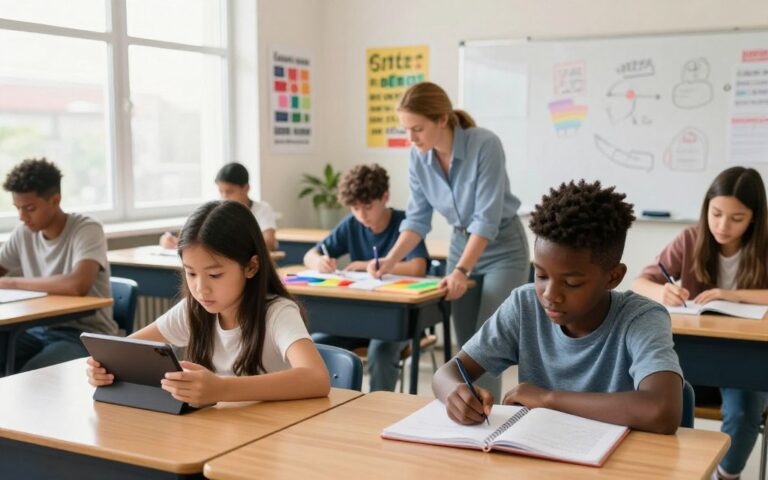
Here’s how it works in practice. A middle school science teacher might assign a Khan Academy video for homework. Then, in class, students work on lab stations, some doing independent tasks tied to standards. Elementary teachers might rotate reading groups while other students do leveled tasks on tablets.
Studies show blended learning boosts engagement and differentiation. Schools using learning management systems can track student progress and adjust support. Start with one unit, align tasks with standards, and use data to improve activities.
Teacher facilitation changes the teacher’s role from just teaching to coaching, mentoring, and assessing. Teachers design learning paths, help with skills, and give feedback. They lead mini-lessons, meet with students, and give small-group instruction.
Good teachers model thinking strategies and teach students to set and change goals. They pick quality resources, show how to use them, and check on progress. This helps students learn to work on their own.
Teachers need training to do this well. They need to learn about digital tools, different teaching methods, and how to design independent learning plans. Administrators should give teachers time to plan and support students without rushing the curriculum.
Policy and scheduling are key to success. Make sure there’s time for conferences and small-group work. Use assessment data to update learning plans and help students reach their goals in an independent learning setting.
Strategies for Effective Independent Learning
Learning on your own gets better with good plans and tools. This guide offers practical tips for self-study. It helps you make progress every day and on big projects.
Setting clear goals
Start with SMART goals: specific, measurable, achievable, relevant, and time-bound. Break big goals into smaller tasks for each week and day. Keep track of your progress in a journal and reflect for five minutes daily.
Make a learning plan that fits your college or career goals. Include checkpoints and rubrics to track your progress. Get feedback from teachers or peers to stay motivated.
Utilizing learning resources
Find quality materials from open educational resources, library databases, and video lectures. Learn to check sources to avoid false information.
Try tools like Anki for spaced repetition and active recall drills. Use project-based templates and collaborative documents for hands-on practice. Join mentorship programs, local library workshops, or online forums for support.
Independent study techniques
Set a regular study schedule with focused time and breaks. Use the Pomodoro method or 25–50 minute focused sessions with brief rest.
Mix active recall with practice tests and teach-back exercises. Combine reading with note-taking that summarizes ideas in your own words. Regular self-assessment helps refine strategy and improves retention.
| Strategy | How to Apply | Tools & Resources |
|---|---|---|
| Goal Planning | Write SMART goals, set weekly milestones, review with rubrics | Google Docs, Trello, printable planners |
| Resource Curation | Collect OER, library articles, and vetted videos; evaluate credibility | JSTOR, Khan Academy, public library databases |
| Retention Techniques | Use spaced repetition, active recall, and practice testing | Anki, Quizlet, self-made flashcards |
| Project Work | Build portfolios, use templates, seek feedback cycles | Notion, GitHub, Google Workspace |
| Community Support | Join study groups, mentorships, and local classes for help | Local community colleges, Meetup groups, Reddit study communities |
The Impact of Independent Learning on Different Learning Styles
Independent learning changes how students learn. It lets them use their strengths. Teachers can make plans that fit each student’s needs.
Visual Learners
Visual learners do best with pictures and diagrams. Mind maps, infographics, and color notes help them remember. They can make videos and pause to summarize.
Tools like Canva and MindMeister help with visuals. Videos with captions and speed control are flexible for learning alone.
Learning plans should include visual aids. This makes tracking progress easy.
Auditory and Kinesthetic Learners
Auditory learners learn from listening. Podcasts, lectures, and text-to-speech help them review. Recording and speaking out loud helps remember.
Kinesthetic learners need to do things. Labs, maker spaces, and projects help them learn by doing. Mixing physical and digital learning deepens understanding.
Combining different ways of learning helps everyone. For example, building a model and then explaining it helps speaking skills. Make sure everyone has a chance to do hands-on activities, even if they’re learning from home.
Practical tip: Using simple tech tools with clear goals makes learning alone work for all.
| Learning Style | Independent Learning Techniques | Recommended Tools | Fit with Individualized Learning Plans |
|---|---|---|---|
| Visual learners | Infographics, mind maps, annotated videos, color-coded notes | Canva, MindMeister, video players with captions | High — visual organizers and portfolio artifacts track progress |
| Auditory learners | Podcasts, recorded lectures, read-alouds, verbal rehearsal | Audible-style platforms, podcast apps, text-to-speech tools | High — audio logs and reflections fit individualized goals |
| Kinesthetic learners | Hands-on projects, simulations, lab kits, maker activities | Lab equipment, simulation software, maker space tools | Moderate to high — requires resource planning and remote alternatives |
Future Trends in Independent Learning
The world of independent learning is changing. It’s moving towards modular, data-driven paths that fit different careers and lifestyles. Schools, colleges, and employers are using tools that let learners choose their own paths. This supports self-directed learning and keeps skills up to date with market needs.
Personalized learning experiences will become more common. Tools like Carnegie Learning and DreamBox will adapt content and pace to fit each student’s progress. Learning analytics will help spot gaps early and create plans that support individual goals.
Policy debates will influence how personalization grows. Rules like FERPA protect data. Schools must ensure fairness and transparency in how recommendations are made. This is crucial for trust in self-directed learning models.
More competency-based pathways will link learning outcomes to job data. Employers will help design curricula based on workforce needs. This will make self-paced learning more relevant to job requirements.
The rise of microcredentials offers new ways to validate skills. Platforms like Coursera and Credly issue digital badges and certificates. These options allow learners to focus on specific skills without committing to long programs.
Microcredentials appeal to independent learners who need specific skills for certain roles. Colleges and community colleges are partnering with industries to accept these credentials. This supports lifelong learning and flexible career paths.
A modular learning economy is forming. Learners are building portfolios of microcredentials alongside degrees. This encourages continuous learning and gives employers clear signals about skills. The result is a more adaptable, learner-focused education system.
Conclusion: Embracing the Independent Learning Revolution
Independent learning is changing how students get ready for work and life. In the U.S., employers want people who keep learning. This makes lifelong learning a must for jobs.
Learning on your own helps you adjust to new things fast. This is true for new tools, roles, and skills that move between jobs.
Schools and families need to take action. Start teaching how to think about learning early. Give students access to digital tools and quiet places to study.
Also, make learning plans that fit each student’s speed. This helps students learn at their own pace while still getting help when needed.
It’s important to find a balance. Give students freedom but also support them with group work and resources. When schools teach independent learning, students feel ready to learn on their own.
They also learn to handle changes in the job market. This prepares them for the future.
The main point is simple. Learning on your own lets you follow your own path. It builds skills for independence and meets employer needs for ongoing learning. By embracing lifelong learning, we create a workforce ready for tomorrow’s challenges.